

New Work in Practice: What Modern Work Culture Really Needs

New Work is not only changing where and when we work, but also how companies make appreciation, solidarity and corporate culture visible in everyday working life — joint meals, professional office catering and regular team events are among the most effective tools. Companies that invest specifically in food and meeting formats report up to 20% higher employee satisfaction and significantly lower turnover. Decisive: New Work is not a trend, but a fundamental change — and the catering concept must grow with it.
New Work is much more than just a buzzword from the HR department. Behind the term is a fundamental change in the working world that affects companies of all sizes — from the start-up culture with table tennis tables and oat milk to a corporation that is breaking up its rigid structures. Remote work, flexible working hours, hybrid models and a new generation of employees who put meaning before status have changed the rules of the game.
But this flexibility creates a key challenge: How do companies create cohesion when teams no longer meet in the same place every day? How does corporate culture develop when corridors fall silent and the coffee kitchen remains empty? The answer is often more obvious than you think — in deliberately designed moments of encounter, and catering plays a surprisingly central role in this.
Eating together has always been the most natural occasion for human connection. In the New Work era, they are also gaining in strategic importance: as a team-building tool, as a visible sign of appreciation and as a firm anchor in flexible working life.
In this comprehensive guide, we show what New Work actually means, which pillars support the concept and why well-thought-out catering concepts — from everyday Office catering up to the annual Team Event — are among the underestimated success factors in the modern working world.
1. What does New Work mean? Definition and origin
The term New Work dates back to the social philosopher Frithjof Bergmann, who devised an alternative model to traditional contract work back in the 1980s. His core idea: Work should not only serve to earn a living, but should also be meaningful and support people in their development.
In today's corporate context, the definition has evolved. New Work describes the entirety of all measures that make work more flexible, self-determined and people-centered. This includes flexible working time and workplace models as well as flat hierarchies, agile methods, a culture of trust and, last but not least, the physical design of the work environment — including the question of how and what employees eat at work.
What seems like a side issue at first glance turns out to be a tough location factor on closer inspection. A recent study shows that employee catering is a relevant factor for 67% of employees when choosing an employer. The modern Company catering It has therefore long been part of the New Work Strategy.
2. The five pillars of New Work
New Work is based on several principles that work together and reinforce each other. Companies that only implement individual elements are not exploiting the potential.
Flexibility in time and place
The first and most visible pillar is flexibility in terms of location and time. Remote work, home office, work and flexitime are now standard in many industries. However, this flexibility requires conscious counterbalances: regular face-to-face days, joint rituals and events that bring teams together physically — such as a weekly team lunch with professional Business catering.
Meaningfulness and purpose
Employees want to understand why they do what they do. Companies that clearly communicate their purpose and make it tangible in everyday life retain talent in the long term. Seemingly small gestures also play a role here: Anyone in organic catering, regional products or vegan options invests, shows that sustainability is not just on the website.
Self-determination and personal responsibility
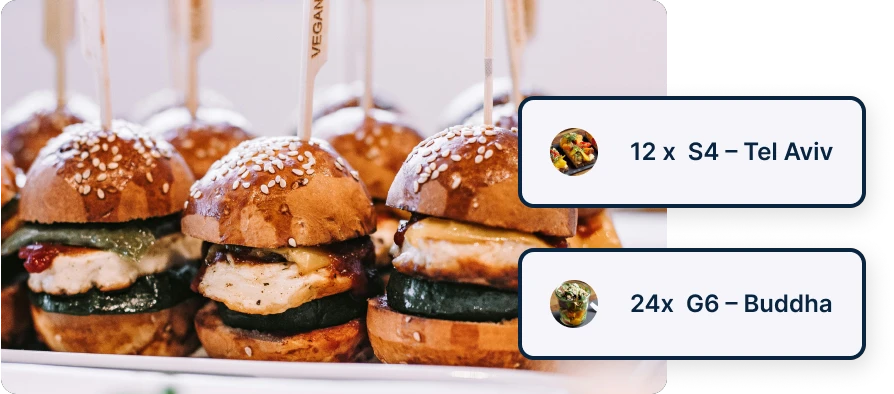
New Work relies on responsible employees who make decisions on their own responsibility. Rigid guidelines give way to agile frameworks and results-oriented working methods. This culture of personal responsibility is also reflected in modern catering concepts: instead of a fixed canteen, teams choose what they want to eat themselves — via flexible catering platforms that allow individual orders.
Community and collaboration
Despite all individualization, humans remain social beings. New Work needs spaces and events for real encounters. Eating together is one of the oldest and most effective forms of human connection. A regular team breakfast with fresh Brunch catering can do more for team cohesion than many team building seminars.
personal development
New Work promotes the continuous development of each individual. Learning becomes part of everyday working life, mistakes are seen as an opportunity. Companies that consistently live this culture create environments in which people feel comfortable and do their best — a task to which the physical work environment and the quality of food also contribute.
3. New work in practice: What has changed
The theory sounds convincing, but what does New Work actually look like in everyday corporate life? The changes affect almost every aspect of collaboration.
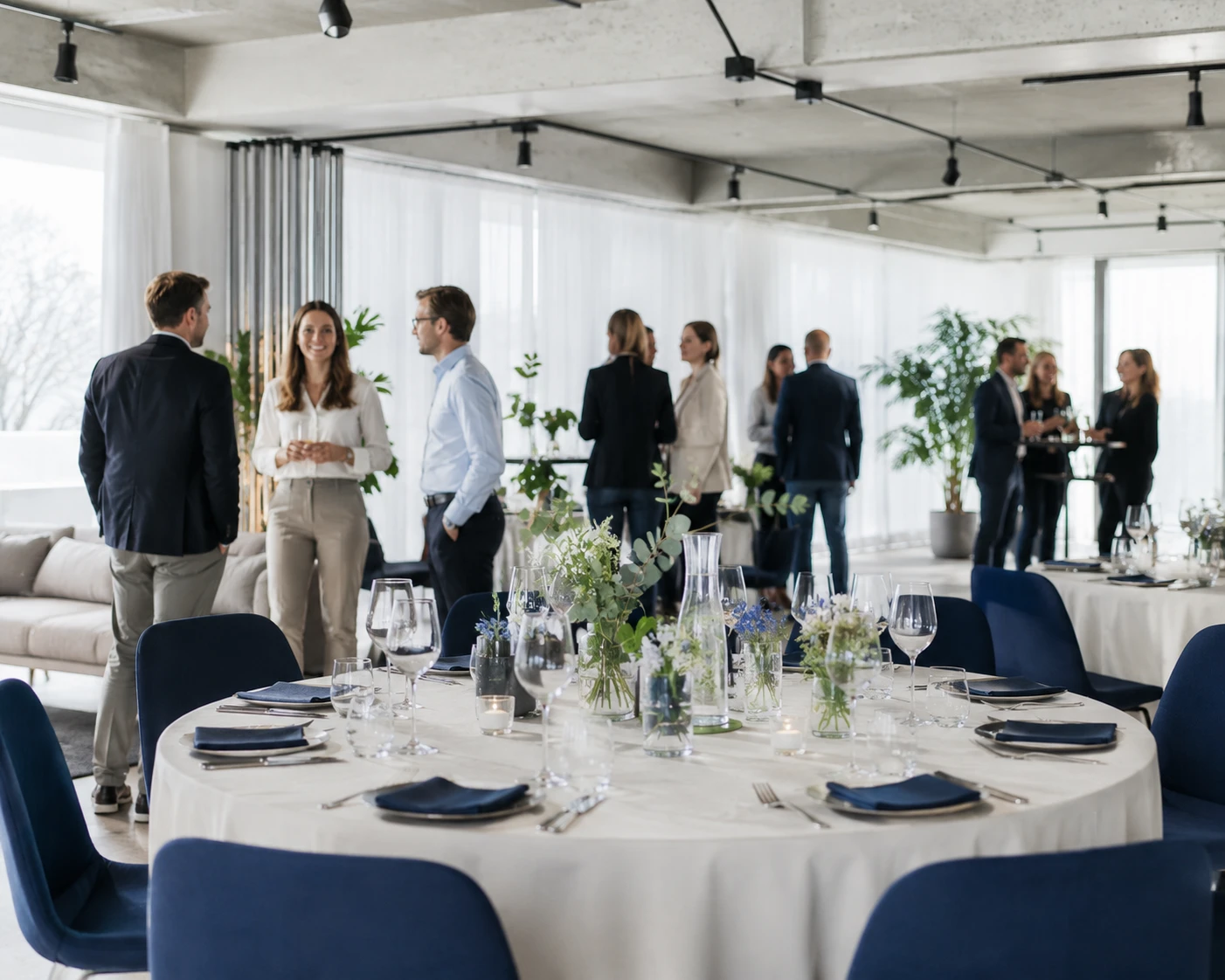
Offices are changing from pure workplaces to meeting places. Instead of long rows of desks, collaboration zones, lounge areas and — particularly relevant — well-equipped kitchen and dining areas are being created, which invite you to relax together. The canteen becomes a community kitchen, the meeting room a workshop space with integrated catering.
Meetings increasingly start with a joint breakfast or end with an after-work event. corporate events such as Summer festivals, quarterly kickoffs or strategy offsites are deliberately planned as culturally defining moments — and that Event catering It is much more than a cost factor: it is a cultural component.
At the same time, the hybrid working environment poses new logistical questions for companies: How do you organize meals when there are 20 employees in the office on some days and 80 on others? Flexible catering solutions, which adapt to changing numbers of people in the short term, are becoming an operational must.
4. The role of food in new work culture
Food is culture. What and how a company feeds its employees says more about its values than any employer branding video. In the New Work era, employee catering is becoming a strategic tool.
The classic company canteen with a fixed menu and uniform distribution no longer fits the flexible working environment. Instead, modern companies rely on modular concepts: buffet catering for larger team days, finger food for quick stand-up meetings, Brunch deliveries for creative workshops and Barbecue catering for summer team building on the roof terrace.
This diversity would hardly be possible without digital catering marketplaces. Platforms such as egora enable companies to select exactly the offer from a broad network of local caterers that suits the occasion — without long-term contracts, without minimum purchases and with the flexibility that New Work requires.
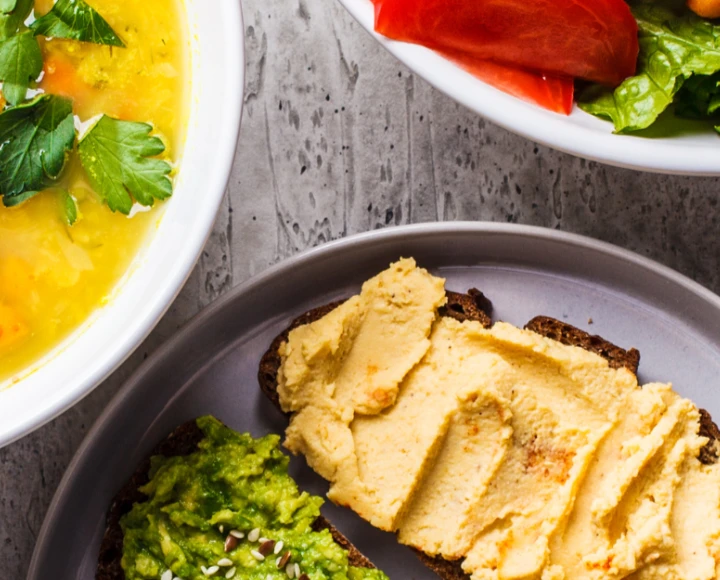
Another aspect is gaining in importance: Dietary diversity as a form of active inclusion. Teams are now more diverse than ever — culturally, religiously and in their dietary habits. A catering concept that, of course, includes vegetarian, vegan, offering gluten-free and allergy-friendly options, is not a nice-to-have, but an expression of an inclusive corporate culture.
5. Team events at the heart of New Work
In a working world in which teams run into each other by chance less and less often, planned meeting formats are gaining in importance. Team Events are no longer an optional bonus in the new work era, but a strategic necessity.
This is no longer about the obligatory company outing. Modern team events range from monthly team dinners to creative cooking workshops and garden parties to offsite retreats lasting several days. It is not the format that is decisive, but the regularity and quality of the shared experience.
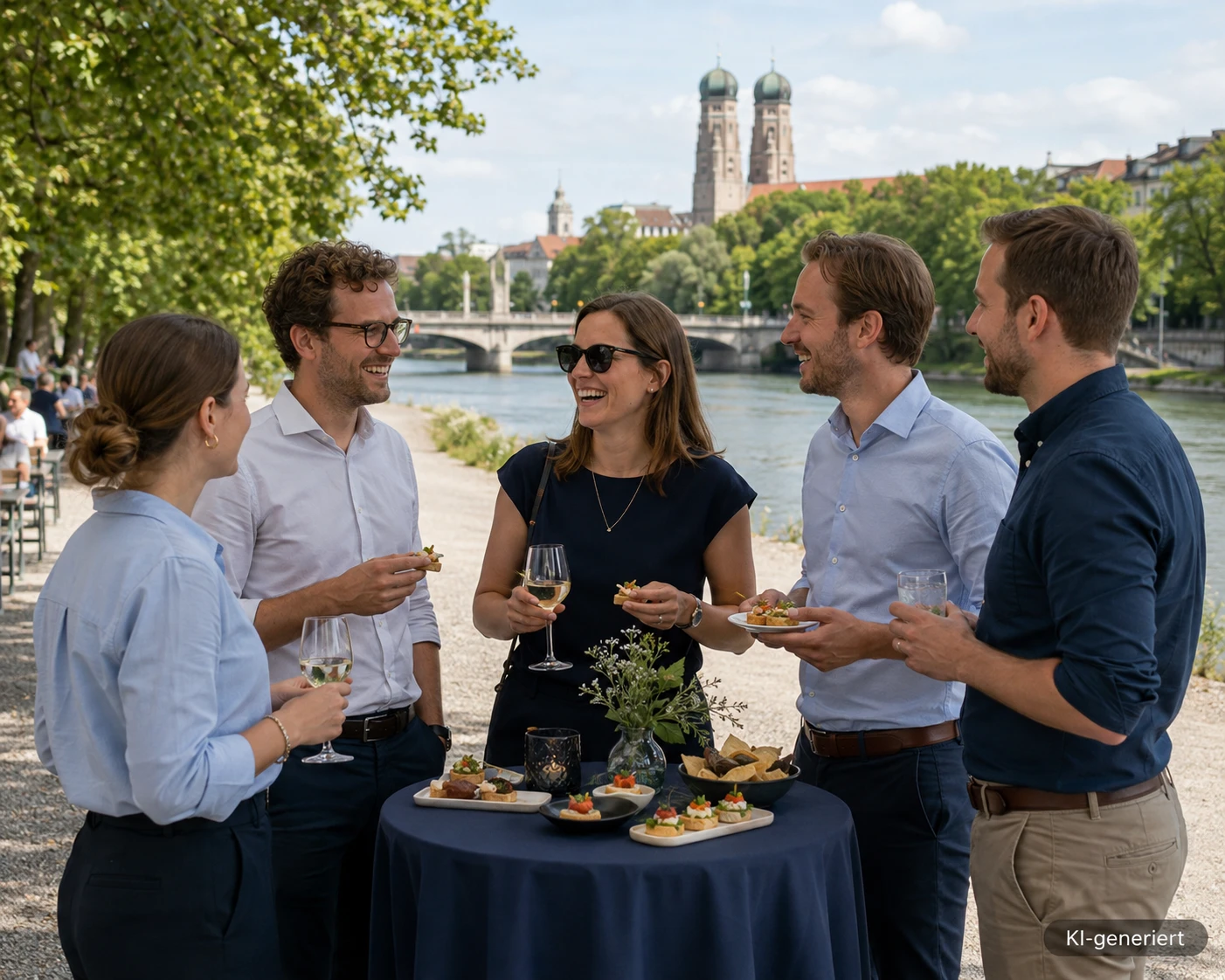
Catering plays a double role here: It is both the framework and the content. Cooking together brings people together in a different way than a joint meeting. A high-quality dinner after an intensive workshop day signals appreciation. And a relaxed Sommerfest With professional catering, create memories that keep teams together.
Companies that take New Work seriously plan and budget regular team events as an integral part of their HR strategy. The investment is paying off: Studies show that regular informal meetings improve collaboration in remote teams by up to 25%.
New Work braucht Begegnungsmomente
- Regelmäßige Team-Lunches flexibel organisieren
- Office-Catering an hybride Modelle anpassen
- Wertschätzung im Arbeitsalltag sichtbar machen

6. Office catering in a new work office: concepts and formats
Daily meals in the office are the most common point of contact between employees and the topic of catering. This is where it becomes clear whether New Work only exists on PowerPoint slides or is lived in everyday life.
Proven catering formats for the modern office include weekly team lunches where the entire team eats together — a simple but effective ritual that strengthens cohesion. Breakfast catering for office days creates a positive start to the day and motivates employees to come to the office. finger food and snack boxes for workshops and meetings keep energy up without interrupting the flow of work. And seasonal specials — from grilling season in summer to Christmas party catering in December — set trends over the course of the year.
The key lies in regularity and quality. A pizza package ordered once a quarter is not a New Work catering concept. A well-thought-out Office catering However, with changing local caterers, various dietary options and an appealing presentation, it does.
7. Costs and ROI: What New Work food costs — and brings
Investment in employee catering is measurable — both in terms of costs and income. A realistic calculation helps with internal arguments vis-à-vis management.
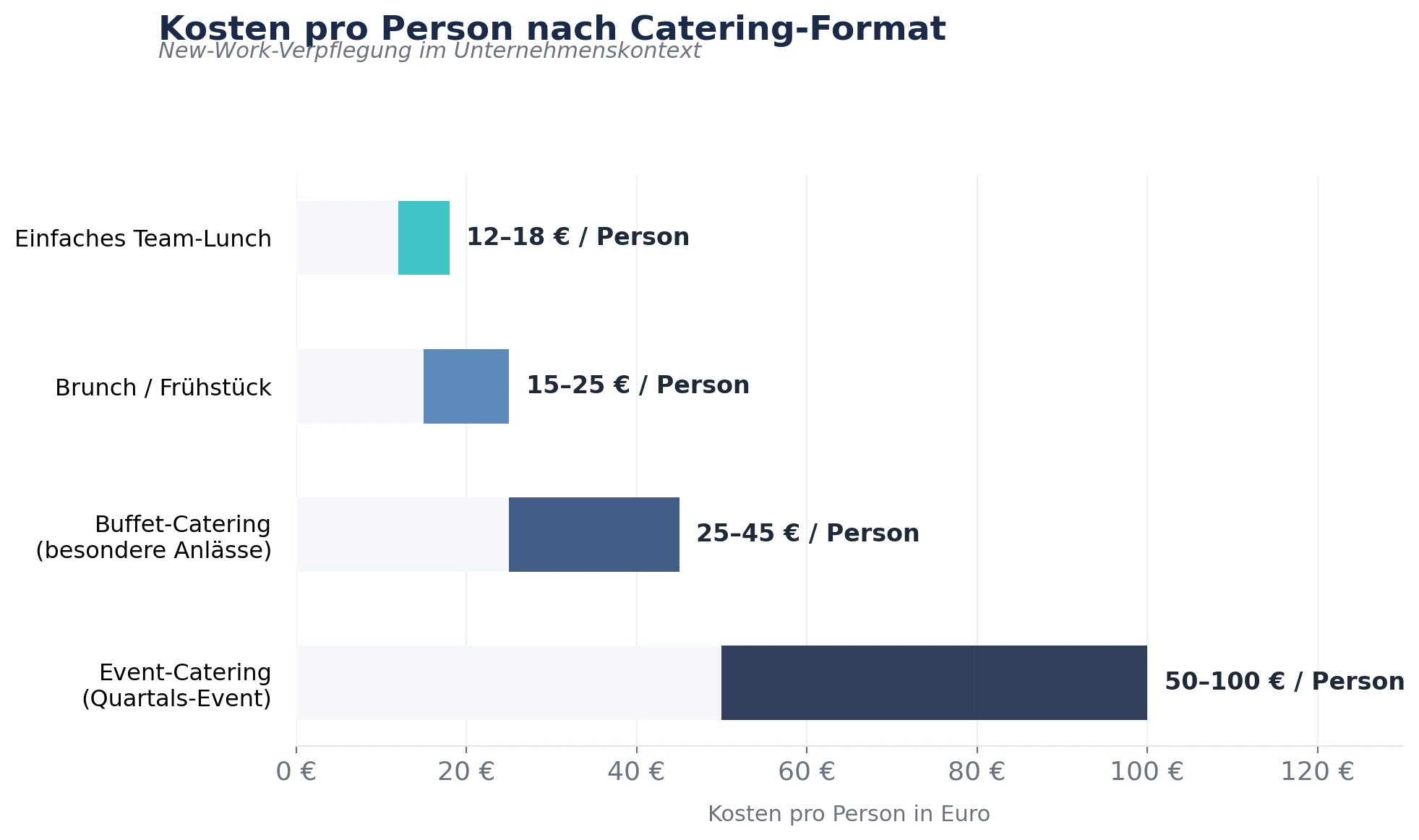
The guideline for regular office catering is: A simple team lunch is 12 to 18 euros per person. An upscale buffet catering For special occasions, costs between 25 and 45 euros per person. A monthly team breakfast or Brunch catering is available from 15 to 25 euros per person. Quarterly team events with professional Event catering are 50 to 100 euros per person.
This is offset by measurable effects: A reduction in fluctuation costs, which can quickly amount to 10,000 to 30,000 euros with a single new appointment. Fewer sick days due to better nutrition and higher satisfaction. Higher productivity on office days through joint rituals and better team dynamics. And stronger employer branding, which lowers recruiting costs.
8. Budget planning: Food as a fixed item in the New Work budget
Companies that consistently implement New Work integrate food as a fixed budget item — not as a variable expenditure that will be eliminated during the next round of savings.
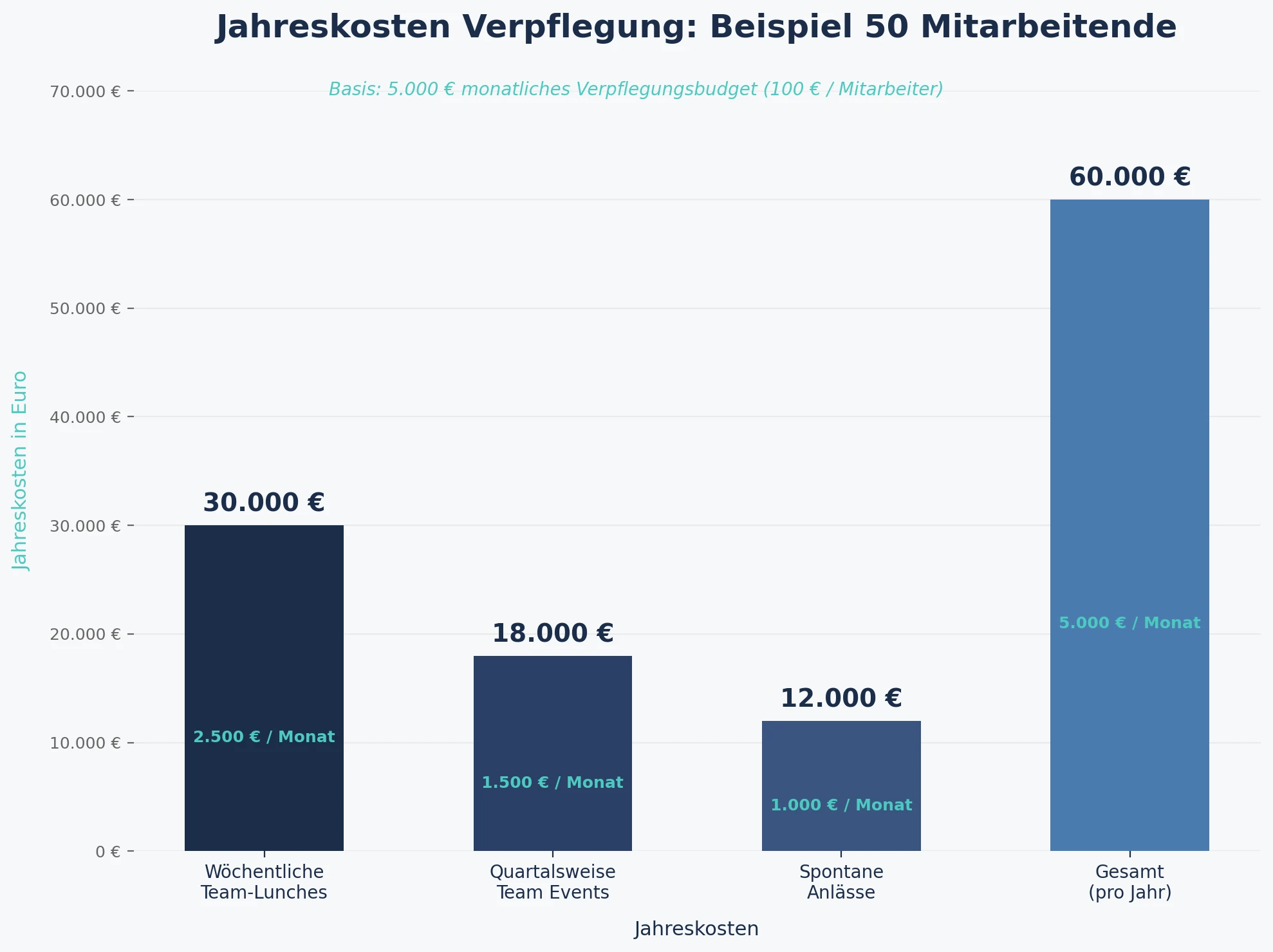
A proven budget distribution for New Work catering is as follows: Around 50 percent of the catering budget is spent on regular office catering, such as weekly team lunches and breakfasts. Around 30 percent go to team events and special occasions such as summer parties, Christmas parties and quarterly kickoffs. The remaining 20 percent cover spontaneous events — from short-term workshop catering to birthday cake.
For a company with 50 employees and a monthly catering budget of 5,000 euros, this means: 2500 euros for two weekly team lunches, 1500 euros pro rata for quarterly events and 1000 euros for flexible spending. Extrapolated to one year, that's 60,000 euros — an investment that pays off if you avoid even one or two cancellations.
9. New work and sustainability: two sides of the same coin
Sustainability is not a separate issue in addition to New Work, but an integral part. Employees who value meaningful work and self-determination also expect responsible use of resources.
In the catering context, this means choosing regional and seasonal ingredients, increasing the proportion of plant-based dishes, minimizing food waste through needs-based planning and paying attention to environmentally friendly packaging. Many caterers on platforms such as egora now offer explicitly sustainable concepts — from organic catering to zero-waste buffets to purely plant-based menus.
This orientation not only makes ecological sense, but also sends a strong signal to the workforce: We take your values seriously. In practice, it has been shown that sustainable catering offers are particularly well received by employees under 35 years of age — i.e. exactly the target group for which companies compete most strongly in the War for Talents.
Verpflegung als Teil deiner New-Work-Strategie
- Catering-Lösungen für Teamtage & Offsites
- Flexible Formate ohne langfristige Bindung
- Passend für 20 bis 200+ Mitarbeitende
10. Avoid typical mistakes when implementing new work
Many companies fail not because of the idea of New Work, but because of its implementation. These common mistakes mean that well-intentioned measures fail to have an effect: understand New Work only as a home office rule and neglect the cultural aspects; treat team events and shared meals as a dispensable luxury rather than as a strategic investment; when it comes to catering, use one-size-fits-all solutions that do not do justice to the diversity of the team; and although modern the office, do not create an infrastructure for eating and catering together.
The most common mistake in the catering sector: Companies book a big event once a year with all the trimmings, but forget the small, regular formats that really make the difference. A monthly team lunch is more sustainable than a one-off mega event.
11. Frequently asked questions about New Work and catering
How much should companies spend per employee on food in a new work context?
As a guideline, 80 to 120 euros per employee and month have proven effective. This includes regular team lunches and pro rata event costs. The tax benefit in kind for meals is currently 4.13 euros per meal.
Which catering format is best for hybrid teams?
Flexible formats such as buffet catering and finger food work best because they can be adapted to fluctuating numbers of people. It is important to have a caterer who enables short-term changes.
How do you organize regular office catering without your own canteen?
Catering marketplaces such as Egora can be used weekly or monthly Office catering-Organize deliveries easily — with changing caterers, various menu options and without long-term contracts.
Is catering tax-deductible as a new work measure?
Employee catering expenses are generally deductible as operating expenses. There are exemptions for regular contributions in kind. Tax advice on a case-by-case basis is recommended.
12. Checklist: Establish a new work catering concept
Analysis (month 1)
- [] Evaluate the current catering situation in the company
- [] Inquire about the needs and wishes of employees
- [] Record dietary preferences and intolerances
- [] Check available infrastructure in the office (kitchen, dining area, cooling)
Concept (month 2)
- [] Define and approve a monthly catering budget
- [] Plan a mix of regular and special formats
- [] Select catering partners via a platform such as egora
- [] Define sustainability criteria
Implementation (month 3)
- [] Start pilot phase with weekly team lunch
- [] Establish a feedback loop with the team
- [] First quarterly event with Event catering scheme
- [] Clarify ordering process and responsibilities
Optimization (from month 4)
- [] Analyze feedback systematically
- [] Adjust and diversify caterer selection
- [] Integrate seasonal formats (summer barbecues, Christmas parties)
- [] Carry out a cost-benefit analysis after 6 months
13. Conclusion: New Work needs new catering concepts
New Work is fundamentally changing the world of work — and with it the demands placed on everything that shapes everyday working life. Employee catering is not a secondary issue, but a strategic lever for corporate culture, employee loyalty and employer attractiveness.
The most important findings summarized: Eating together is one of the most effective tools for team cohesion in the hybrid working world. Flexible catering solutions are a better fit for New Work than rigid canteen concepts. Regular, smaller formats have a more lasting effect than rare major events. Sustainability and dietary diversity are not a freestyle, but an active corporate culture. And the investment in food pays off measurably — through lower turnover, higher satisfaction and stronger employer branding.
With catering marketplaces such as egora, companies can implement their new work catering concept flexibly and easily — from weekly Office catering up to the big corporate event, suitable for every team size and budget.